
Node.js and TypeScript have emerged as powerful tools for developing high-performance, scalable, and secure back-end applications in the enterprise landscape. This blog post explores the best practices, benefits, and real-world applications of combining these technologies for enterprise-grade back-end solutions.
Best Practices for Developing Enterprise Back-End Applications with Node.js and TypeScript
Modular Architecture and Code Organization
One of the key best practices for developing enterprise back-end applications with Node.js and TypeScript is to maintain a modular architecture and well-organized codebase. This approach promotes code reusability, maintainability, and scalability.
- Module Separation: Separate concerns by creating distinct modules for different functionalities, such as routing, controllers, services, and data access layers.
- TypeScript Interfaces and Classes: Leverage TypeScript's interfaces and classes to define clear contracts and abstractions for your modules, making it easier to understand and maintain the codebase.
- Dependency Injection: Implement dependency injection to decouple components and facilitate easier testing and maintenance.
Robust Error Handling and Logging
Effective error handling and logging mechanisms are crucial for enterprise-level back-end applications to ensure resilience, debugging, and monitoring capabilities.
- Error Handling Middleware: Implement a centralized error handling middleware to catch and handle errors consistently across your application.
- Logging Strategies: Utilize a logging library like Winston or Bunyan to log errors, warnings, and important events with appropriate log levels and formatting.
- Error Reporting and Monitoring: Integrate your application with error reporting and monitoring tools (e.g., Sentry, Rollbar) to capture and analyze errors in production environments.
Testing and Continuous Integration
Adopting a test-driven development (TDD) approach and implementing continuous integration (CI) practices are essential for delivering high-quality, reliable back-end applications.
- Unit Testing: Write unit tests for individual components and functions using testing frameworks like Jest or Mocha.
- Integration and End-to-End Testing: Implement integration and end-to-end tests to ensure the correct functionality of your application as a whole.
- CI/CD Pipeline: Set up a CI/CD pipeline with tools like Jenkins, Travis CI, or GitHub Actions to automatically build, test, and deploy your application upon code changes.
Node.js and TypeScript for High-Performance Back-End Systems

Event-Driven Architecture and Asynchronous Programming
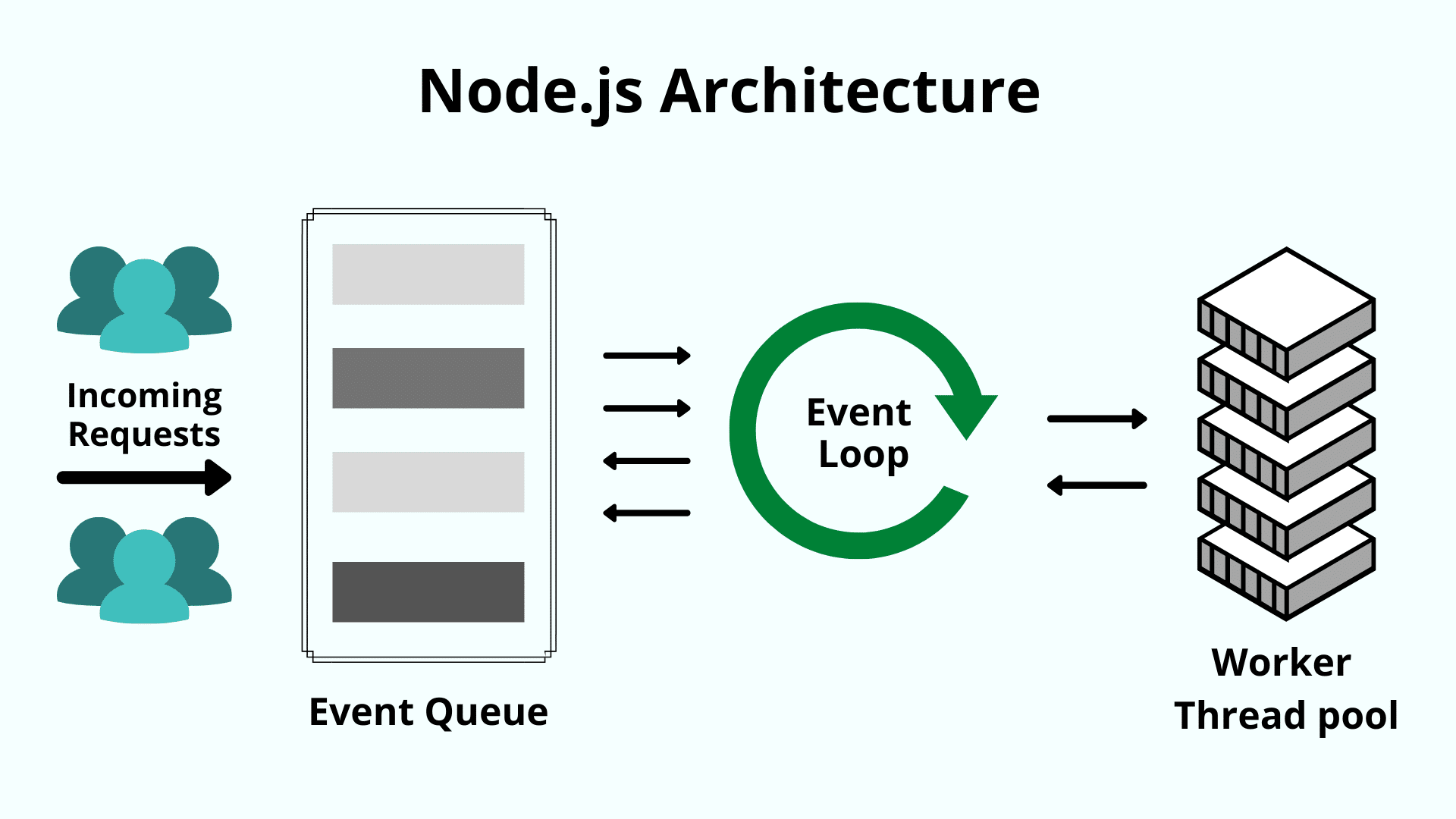
Node.js excels in handling concurrent connections and event-driven architectures, making it well-suited for building high-performance back-end systems.
- Event Loop: Leverage Node.js's event loop to handle I/O operations efficiently and avoid blocking the main thread.
- Asynchronous Programming: Utilize asynchronous programming techniques, such as callbacks, promises, and async/await, to maximize concurrency and responsiveness.
- Worker Threads: For CPU-intensive tasks, consider using Node.js's worker threads to offload computations to separate threads, preventing blocking the event loop.
Scaling and Load Balancing
As your back-end application grows, scalability and load balancing become critical considerations. Node.js and TypeScript offer various strategies to address these challenges.
- Clustering: Use Node.js's cluster module to distribute the workload across multiple processes, taking advantage of multi-core systems.
- Load Balancing: Implement load balancing techniques, such as round-robin or least-connections, to distribute incoming requests across multiple instances of your application.\n- Caching: Implement caching strategies, such as in-memory caching (e.g., Redis) or content delivery networks (CDNs), to reduce server load and improve response times.
Performance Optimization
Optimizing performance is crucial for delivering a smooth user experience and efficient resource utilization in enterprise back-end applications.
- Profiling and Monitoring: Use profiling tools like Node.js's built-in profiler or third-party tools (e.g., clinic.js, 0x) to identify performance bottlenecks and optimize resource utilization.
- Code Optimization: Leverage TypeScript's type system and static analysis to catch potential performance issues early in the development process.
- Database Optimization: Implement efficient database querying strategies, indexing, and caching mechanisms to minimize database load and improve response times.
Utilizing TypeScript to Enhance Node.js Back-End Applications
Static Type Checking and Type Safety
One of the primary benefits of using TypeScript in Node.js back-end applications is the added type safety and static type checking.
- Catch Errors Early: TypeScript's static type checking helps catch type-related errors during development, before they manifest in production.
- Code Documentation: TypeScript's type annotations serve as self-documenting code, improving code readability and maintainability.
- Tooling and Refactoring: TypeScript's tooling support, including code editors and IDEs, provides features like autocompletion, code navigation, and safe refactoring, improving developer productivity.
TypeScript Decorators and Metadata Reflection
TypeScript's support for decorators and metadata reflection enables advanced language features and developer productivity enhancements.
- Dependency Injection: Use decorators to facilitate dependency injection and inversion of control patterns in your back-end applications.
- Aspect-Oriented Programming: Implement cross-cutting concerns, such as logging, caching, and authorization, using decorators and metadata reflection.
- Code Generation: Leverage TypeScript's metadata reflection capabilities to generate code or enhance existing code at build time.
Leveraging TypeScript Ecosystem
TypeScript benefits from a vibrant and growing ecosystem of libraries, tools, and frameworks specifically designed for TypeScript or compatible with TypeScript codebases.
- TypeScript-First Libraries: Utilize TypeScript-first libraries like RxJS, TypeORM, and Nest.js, which provide excellent type support and integration with TypeScript codebases.
- Type Definition Files: For libraries without native TypeScript support, leverage the DefinitelyTyped repository or create your own type definition files to provide type safety and tooling support.
- TypeScript-Enabled Frameworks: Adopt TypeScript-enabled frameworks like Express or Koa, which offer seamless integration with TypeScript and provide type-safe APIs and middleware.
Integrating Node.js and TypeScript for Secure Back-End Development
Input Validation and Sanitization
Proper input validation and sanitization are crucial for preventing security vulnerabilities, such as SQL injection, cross-site scripting (XSS), and other injection attacks.
- Type-Safe Input Validation: Leverage TypeScript's type system and third-party libraries (e.g., class-validator, joi) to perform type-safe input validation.
- Data Sanitization: Implement data sanitization techniques, such as input filtering and output encoding, to prevent injection attacks.
- Secure Headers: Configure secure HTTP headers (e.g., X-XSS-Protection, Content-Security-Policy) to mitigate various web application vulnerabilities.
Authentication and Authorization
Robust authentication and authorization mechanisms are essential for ensuring data privacy and access control in enterprise back-end applications.
- Token-Based Authentication: Implement token-based authentication strategies, such as JSON Web Tokens (JWT), to secure API endpoints and user sessions.
- Role-Based Access Control (RBAC): Utilize RBAC principles to define and enforce access policies based on user roles and permissions.
- OAuth and OpenID Connect: Integrate with third-party authentication providers (e.g., Google, Facebook, Microsoft) using OAuth and OpenID Connect protocols.
Data Protection and Encryption
Protecting sensitive data and implementing appropriate encryption techniques are critical for maintaining data integrity and privacy in enterprise back-end applications.
- Data Encryption: Encrypt sensitive data at rest (e.g., database) and in transit (e.g., HTTPS) using strong encryption algorithms and secure key management practices.
- Secure Cryptographic Functions: Utilize Node.js's built-in crypto module or third-party libraries (e.g., bcrypt, argon2) for secure hashing, salting, and encryption operations.
- Secure Storage: Store sensitive information, such as API keys and database credentials, securely using environment variables or secure storage solutions (e.g., HashiCorp Vault, AWS Secrets Manager).
Scalability and Performance Considerations for Node.js and TypeScript Back-End Applications

Horizontal Scaling and Load Balancing
As your back-end application grows, horizontal scaling becomes necessary to handle increased traffic and load. Node.js and TypeScript offer various strategies for horizontal scaling and load balancing.
- Containerization: Package your Node.js and TypeScript applications as Docker containers for easy deployment and scaling across multiple hosts or cloud platforms.
- Cluster Load Balancing: Utilize load balancing solutions, such as NGINX or Amazon Elastic Load Balancing (ELB), todistribute incoming traffic across multiple instances of your application, ensuring high availability and improved performance.
- Auto-Scaling: Implement auto-scaling mechanisms in cloud environments, such as AWS Auto Scaling or Google Cloud Autoscaler, to automatically adjust the number of instances based on traffic patterns.
Caching Strategies
Caching plays a crucial role in improving the performance and scalability of Node.js and TypeScript back-end applications by reducing response times and server load.
- In-Memory Caching: Utilize in-memory caching solutions like Redis or Memcached to store frequently accessed data in memory, reducing database load and speeding up response times.
- Content Delivery Networks (CDNs): Offload static assets, such as images, CSS, and JavaScript files, to CDN providers like Cloudflare or Akamai to serve content from edge locations closer to users, reducing latency.
- Query Result Caching: Cache database query results using tools like Sequelize caching or Redis to avoid redundant queries and improve overall application performance.
Database Optimization Techniques
Efficient database operations are essential for the performance and scalability of Node.js and TypeScript back-end applications. Consider the following optimization techniques:
- Indexing: Create appropriate indexes on frequently queried columns to speed up database lookups and query performance.
- Query Optimization: Optimize database queries by avoiding N+1 query problems, utilizing query pagination, and leveraging database-specific features like query caching.
- Connection Pooling: Use connection pooling to manage database connections efficiently, reducing connection overhead and improving scalability under high loads.
Node.js and TypeScript in Real-World Enterprise Back-End Solutions
Case Study: Building a Microservices Architecture
In a real-world enterprise scenario, adopting a microservices architecture with Node.js and TypeScript can offer flexibility, scalability, and maintainability.
- Service Isolation: Decompose monolithic applications into smaller, independent services that can be developed, deployed, and scaled independently.
- Inter-Service Communication: Use lightweight protocols like HTTP/REST or message brokers like RabbitMQ to facilitate communication between microservices.
- Fault Tolerance: Implement resilience patterns like circuit breakers, retries, and timeouts to handle failures gracefully and prevent cascading failures across services.
Success Story: Migrating to Node.js and TypeScript
Many enterprises have successfully migrated their legacy systems to Node.js and TypeScript, experiencing benefits such as increased developer productivity, improved performance, and reduced maintenance costs.
- Legacy System Challenges: Legacy systems often suffer from outdated technology stacks, performance bottlenecks, and maintenance challenges, making them prime candidates for migration.
- Migration Strategy: Develop a phased migration strategy, starting with low-risk components, conducting thorough testing, and gradually migrating critical parts of the system.
- Business Impact: Measure the business impact of the migration, including improvements in time to market, scalability, and cost savings, to demonstrate the value of the transition to Node.js and TypeScript.
Best Practices: Continuous Integration and Deployment (CI/CD)
Implementing CI/CD pipelines for Node.js and TypeScript applications is essential for automating build, test, and deployment processes, ensuring code quality and rapid delivery.
- Automated Testing: Integrate automated unit tests, integration tests, and end-to-end tests into your CI/CD pipeline to catch bugs early and maintain code quality.
- Deployment Automation: Use tools like Jenkins, GitLab CI/CD, or GitHub Actions to automate deployment tasks, such as building Docker images, deploying to staging environments, and promoting releases to production.
- Monitoring and Feedback: Incorporate monitoring tools like Prometheus, Grafana, or New Relic into your CI/CD pipeline to track performance metrics, detect issues, and provide feedback to developers.
Emerging Trends and Innovations in Node.js and TypeScript Back-End Development
Serverless Computing with Node.js and TypeScript
Serverless architectures, powered by platforms like AWS Lambda or Azure Functions, are gaining popularity for building scalable, event-driven back-end applications with Node.js and TypeScript.
- Event-Driven Design: Leverage serverless functions to respond to events, such as HTTP requests, database changes, or file uploads, without managing server infrastructure.
- Cost Efficiency: Pay only for the compute resources used during function execution, eliminating the need to provision and maintain servers continuously.
- Scalability: Benefit from automatic scaling and high availability provided by serverless platforms, allowing applications to handle varying workloads seamlessly.
GraphQL for API Development
GraphQL, a query language for APIs, offers a flexible and efficient approach to designing and consuming APIs in Node.js and TypeScript back-end applications.
- Declarative Data Fetching: Clients can request only the data they need using GraphQL queries, reducing over-fetching and under-fetching of data.
- Type-Safe APIs: Define strongly typed schemas and use TypeScript to ensure type safety and consistency in API development.
- GraphiQL Tooling: Explore and interact with GraphQL APIs using tools like GraphiQL, which provide a graphical interface for querying and testing APIs.
DevOps and Infrastructure as Code (IaC)
DevOps practices, combined with Infrastructure as Code tools like Terraform or AWS CloudFormation, enable automated provisioning and management of infrastructure for Node.js and TypeScript applications.
- Infrastructure Automation: Define infrastructure components, such as servers, databases, and networking, as code to enable versioning, repeatability, and consistency.
- Continuous Deployment: Automate infrastructure provisioning and deployment processes alongside application code, ensuring that changes are applied consistently across environments.
- Scalability and Resilience: Use IaC to scale resources dynamically, implement disaster recovery strategies, and maintain infrastructure resilience in cloud environments.
Node.js and TypeScript: The Future of Enterprise Back-End Development
Node.js and TypeScript continue to evolve and shape the landscape of enterprise back-end development, offering a powerful combination of performance, scalability, and developer productivity.
- Ecosystem Growth: The Node.js and TypeScript ecosystems are vibrant and expanding, with new libraries, tools, and frameworks emerging to address diverse enterprise needs.
- Community Support: A strong community of developers, contributors, and companies actively supports and contributes to the Node.js and TypeScript ecosystems, ensuring their longevity and relevance.
- Adoption Trends: Many enterprises are embracing Node.js and TypeScript for building mission-critical back-end systems, recognizing the benefits of modern, efficient, and scalable technologies.
Video
Conclusion
In conclusion, Node.js and TypeScript have become indispensable technologies for developing high-performance, scalable, and secure enterprise back-end applications. By leveraging the strengths of Node.js's event-driven architecture and TypeScript's static typing capabilities, developers can build robust and maintainable back-end systems that meet the demands of modern businesses. From asynchronous programming and scalability considerations to security best practices and real-world case studies, this comprehensive guide has explored various aspects of using Node.js and TypeScript in enterprise back-end development. As organizations continue to adopt agile practices, microservices architectures, and cloud-native solutions, Node.js and TypeScript are poised to play a central role in shaping the future of enterprise back-end development."






0 Comments